In the rapidly evolving urban landscape of Saudi Arabia, last-mile mobility stands as a critical frontier in the pursuit of smarter, more sustainable transportation. Bridging the gap between major transit hubs and final destinations now demands innovative, eco-friendly solutions that reduce congestion, lower emissions, and enhance daily convenience. Aligned with the ambitions of Vision 2030, Saudi Arabia is accelerating the adoption of electric scooters, bicycles, autonomous shuttles, and digitally integrated transport services that are redefining how cities move. This final stretch of the journey is no longer a barrier; it is an opportunity for transformation, shaping a future where people and goods travel with greater efficiency, affordability, and environmental responsibility. Solutions like these are turning Saudi cities into connected, inclusive, and future-ready hubs.
The Everyday Challenge of Urban Movement
Modern urban centers are expanding at a velocity that consistently outpaces the development and capacity of their existing transport infrastructure. This misalignment has created a pervasive, daily friction point: the “Last Mile” challenge. This final leg of any journey, the distance from transit stops to the user’s ultimate destination, has regrettably become the single greatest obstacle to achieving smooth and sustainable urban mobility. The prevalence of congested streets, chronic limitations in parking availability, and frustratingly long walking distances between key hubs and final stops turn what should be a short, effortless connection into the most inconvenient and time-consuming segment of the daily commute. Effectively, the failure to bridge this critical gap directly influences public choice, often pushing commuters toward private vehicle dependency and, consequently, exacerbating both congestion and environmental pollution.
Defining Last-Mile Mobility
Last-Mile Mobility describes a network of compact, efficient, and environmentally friendly transportation modes—such as electric scooters, e-bikes, and micro-vehicles that close the final gap between public transit hubs and a traveler’s ultimate destination. This often unseen yet crucial link transforms urban mobility from fragmented to fluid, making city travel more convenient, sustainable, and accessible for everyone.
Why It Matters Economically
The economic impact of last-mile mobility extends far beyond convenience. It’s reshaping how individuals, businesses, and cities manage time, cost, and productivity:
-
- Reduced commuting costs: Micro-mobility options such as e-scooters and bikes offer affordable daily transport, cutting fuel expenses and parking fees.
- Improved workforce efficiency: Shorter and smoother commutes translate into more productive hours and less stress for workers.
- Lower infrastructure strain: By reducing car dependency, cities save on road maintenance, parking expansion, and congestion management.
- Boost to local economies: Riders are more likely to visit nearby cafés, shops, and services, revitalizing small businesses and neighborhood markets.
- New market opportunities: The last-mile sector creates jobs in maintenance, software development, logistics, and battery technology—fueling the emerging green economy.
Sustainability and Urban Efficiency
Replacing short car trips with shared electric mobility has become one of the most effective ways to make cities cleaner, quieter, and more livable. The environmental and urban benefits are clear and measurable:
-
- Reducing carbon emissions: Electric scooters and bikes generate up to 90% fewer CO₂ emissions per kilometer than private cars. In cities such as Copenhagen and Amsterdam, the growing use of e-bikes has helped cut annual transport emissions by thousands of tons, an approach that aligns with Saudi Arabia’s environmental and sustainability goals.
- Improving air and noise quality: Shared electric fleets eliminate engine noise and exhaust fumes from short trips, creating calmer and healthier city environments. Studies show that even a small shift from cars to micro-mobility can significantly reduce noise levels in busy districts.
- Making better use of space: A single car parking spot can hold up to ten e-scooters. This shift frees valuable urban areas for green zones, walkways, and public spaces, a concept already visible in Riyadh’s evolving city design projects.
- Enhancing efficiency through smart systems: Connected mobility platforms allow cities to monitor and manage traffic patterns, energy use, and maintenance more effectively. This leads to smoother transport flow and better long-term infrastructure planning.
By encouraging shared electric mobility, Saudi cities are moving closer to the goals of Vision 2030, creating transport systems that are sustainable, efficient, and designed around people rather than vehicles.
Spiders and the Future of Smart Mobility
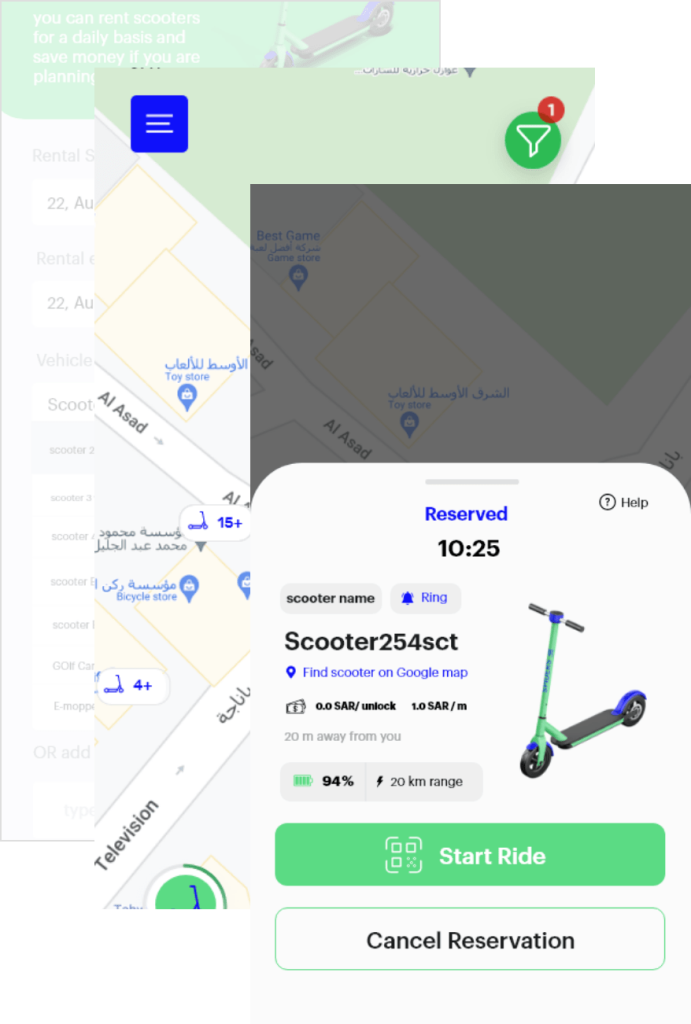
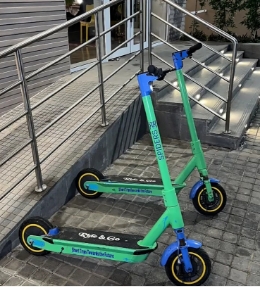
As one of Saudi Arabia’s pioneering micro-mobility companies, Spiders plays a vital role in shaping how cities move toward smarter and more sustainable transport. Founded with a deep understanding of local urban needs, Spiders develops and operates its own in-house technology platform, a rare capability in the regional mobility ecosystem. By providing electric scooters and shared micro-vehicles through an intuitive, data-driven app, Spiders enables users to move quickly, affordably, and cleanly within crowded city environments. The company’s system integrates seamlessly with urban infrastructure, offering real-time usage insights that can help municipalities design more efficient, low-congestion transport networks. Beyond technology, Spiders embodies the spirit of Vision 2030, advancing local innovation, reducing carbon emissions, and improving the quality of life. Its commitment to affordable, accessible mobility and collaboration with city planners positions it not merely as a transport provider, but as a partner in building connected, people-centric Saudi cities.
Conclusion
As cities continue to expand and evolve, the way people move will define the quality of urban life. Last-mile mobility is no longer a secondary service; it is a foundation for efficient, sustainable, and inclusive cities. By turning the daily commute into a cleaner, simpler, and more connected experience, companies like Spiders are not just improving transportation; they are reshaping how urban communities function.